Welcome to my page! I am an internal medicine doctor in the Miami area and have a Dietetics and Exercise Physiology background. In this blog, I talk about...life, really! Welcome to a small snippet of my mind <3.
Today, I was listening to a podcast featuring an attorney named Ryan, and his story struck a chord with me. His journey to law wasn’t linear—just like my path to medicine has been anything but straightforward. In fact, I’m still navigating the journey of finding my passion and purpose.
For a long time, especially during residency, I’ve struggled to feel like I fit in. Medicine has a way of isolating you from the world, particularly during your formative years, like your early 20s. While others are out exploring life and building relationships, you’re stuck in a hospital, surrounded by people who haven’t exactly had the time to grow socially. Conversations often center on complaints about rotations or attendings, which doesn’t leave much room for deep, meaningful connections.
I craved something more. I wanted to truly know people—but how could I, when so many of us were still trying to figure out who we were?
When I talked to people further along in their careers—residents ahead of me, even seasoned attendings—I realized I wasn’t alone. Many admitted that medicine had stunted their social growth. They felt like they’d missed out on important life experiences. Hearing that, I started to recognize myself heading down that same path.
At the same time, my own struggles with social anxiety began to surface. I felt like I was becoming someone I didn’t recognize, someone I didn’t want to be.
And then I heard something from attorney Ryan that truly stayed with me. He shared a story about a world-famous musician, Joshua Bell, who had performed at the White House and was celebrated across the globe. As part of a social experiment, Bell put on a baseball cap, took his violin, and played in a busy subway station with a tip jar at his feet. The expectation was that his incredible talent would attract a massive crowd.
But no one stopped. No one paid attention. Out of the hundreds who passed by, only one person recognized him.
It wasn’t that he wasn’t extraordinary—it was simply that he was in the wrong place.
That story resonated deeply with me. In many ways, that’s how I felt during residency. Maybe I wasn’t broken or lacking—I was just in the wrong place. Somewhere along the way, I lost a bit of myself.
I’m hopeful, though. With time, I believe I’ll rediscover my passions and find the people and places that recharge me. Blogging, for instance, reminds me that I am a creator. Maybe this is where I belong.
I don’t see myself writing to educate, but I do see myself writing so others can feel understood. My writing might not be the most academic, but if I can put into words what someone else is feeling—if I can give them the language to articulate their emotions to others—then I’m closer to my true purpose.
And maybe, just maybe, I won’t feel out of place anymore.
Gosh, sometimes I wish there were more hours in the day. Case in point: I still have a pile of neatly folded clothes sitting on my bedroom floor… for over a week now. Shameful, I know. Speaking of not having enough time, I wanted to share what I’ve been doing to stay active amidst the whirlwind of life.
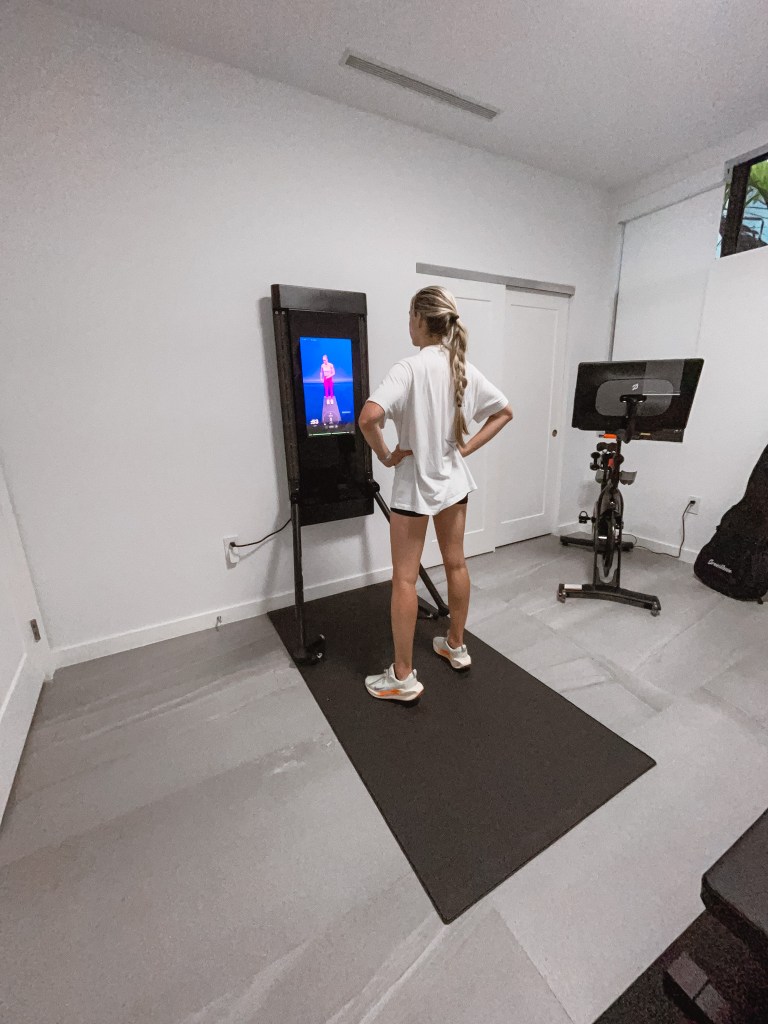
Right now, I’m only strength training once a week—yes, just once. The rest of the week, I focus on going for walks with the baby. By the time we get home, I usually have about an hour and a half with him before his bedtime. I’ve been considering giving the jogging stroller a shot, but truth be told, I’m not a “runner girlie” (yet, anyway).
Ironically, when my baby was a newborn, I managed to squeeze in four 20-minute sessions a week. It wasn’t easy, and my sleep was fragmented, but I had the advantage of not being tied to a physical workplace. These days, my schedule is tighter, so I’m doing the best I can with my one strength session. What’s keeping me going is my 40-week streak on Tonal—how could I quit now? Even though I don’t feel like I’m hitting my full potential, it’s the best I can do right now. And honestly, I’m okay with that.
I used to have this all-or-nothing mindset when it came to fitness. But wow, was that exhausting—and so unproductive. Perfectionism can be crippling when you haven’t built the basic habits to sustain it.
So, if you’re struggling to live a healthier life, start simple. Build from there. Pick workouts that excite you—ones you’re eager to come back to. If you’re dreading them, it could be because they’re either too easy or so intense that your brain equates them with punishment.
Your health journey doesn’t have to be perfect. It doesn’t have to be linear. There will be zigs, zags, gains, losses—it’s all part of the process. The key is to just start and don’t stop. Progress, not perfection, is the goal. You’ve got this!
I recently listened to an eye-opening episode of No One Knows What They Are Doing. In it, the host and guest shared a simple but profound truth: no matter where you are—whether in the U.S. or abroad—happiness is a choice. They pointed out something that stuck with me: moving abroad to “escape” life’s difficulties won’t make those problems disappear. Wherever you go, you bring yourself and your mindset with you. Real peace comes from learning to find joy in the present, rather than searching for it somewhere else.
One idea that truly resonated was the suggestion to idealize your current moment. The word “gratitude” is often thrown around, but to me, it can feel forced, like one more thing I “should” do. But “idealizing” the present moment? That feels different. It feels empowering, almost like a game, to look around and say, “What if this is already ideal?” With this shift, I find myself able to romanticize the small, beautiful things that are happening right now, realizing that someone out there would love to be right where I am. And maybe they would love to be where you are, too.
The guest on the podcast lives abroad and said something else I often think about: how privileged we are as Americans to even consider moving to another country. For so many people around the world, this kind of freedom isn’t an option.
So here I am, idealizing this very moment as I write.
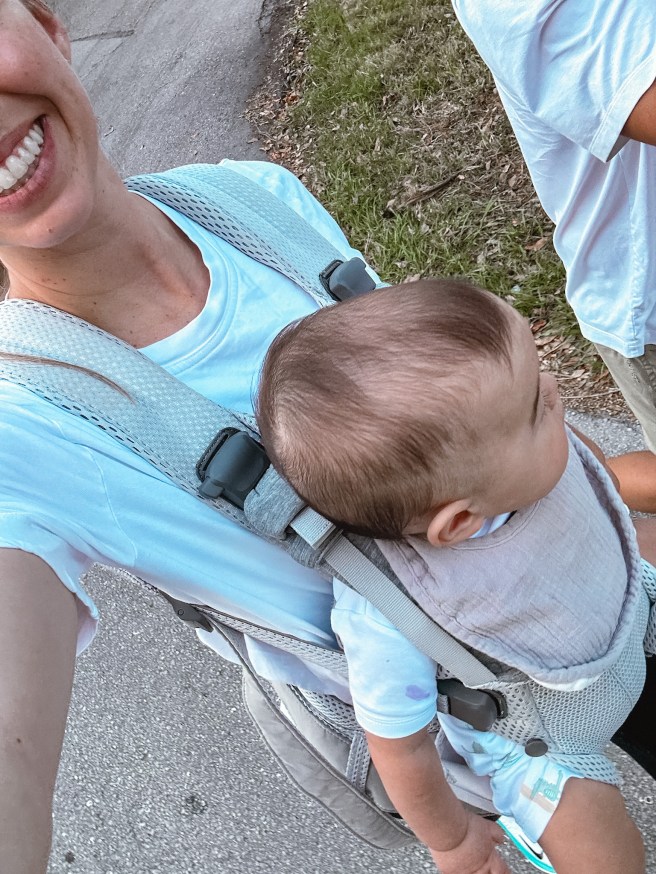
I’m idealizing my walks through our neighborhood, carrying my baby boy snuggly in a front carrier. I marvel at the strength I’ve built to carry his 25+ pounds for over two miles, a proud “rucking” journey we take together. It’s a powerful feeling, knowing I could go on longer if he’d let me. The weather right now is crisp and perfect, the kind of weather that lifts your spirit.
My work life as a new attending is taking shape in ways that feel challenging but good. And I’m finally learning Spanish—something I’ve been meaning to do for so long.
Things aren’t perfect, of course. No one’s life is, really. But right now, these things feel like wins, and I’m choosing to see them that way. Idealizing the present, as it turns out, is something I can carry with me wherever I go.
I recently completed a month-long social media cleanse, and it’s been transformative. Although I didn’t spend much time on social media to begin with, I still felt the subtle drain it caused. Social media has a way of making you compare yourself to others, even unintentionally. Since having a baby, life has felt a bit more isolating. I can’t just “get up and go” like before; everything needs to be carefully planned. On top of that, having limited family support (huge thanks to my mother-in-law!) makes life feel more challenging.
We’ve all heard that social media is often a source of modern stress, anxiety, and even depression. It encourages people to focus on what they don’t have, rather than being grateful for what they do. This month off gave me a chance to reflect and practice gratitude—something that easily slips away when you’re caught in the scroll.
Social media is like a digital pacifier for adults. The moment we feel a hint of boredom, we reach for our phones. But this habit only feeds impatience and distraction. I’ve noticed that I struggle to stay engaged with anything that requires focus, like reading a few paragraphs (hopefully, you’re still with me!). My mind often wanders, a direct result of years of mindless scrolling.
Social media can also stunt critical thinking. It’s much easier to watch a quick reel on “10 Reasons Why I’m Anxious” and self-diagnose than to get curious about my thoughts and find constructive ways to address them. This mindset leaves little room for creativity, problem-solving, or genuine introspection.
For now, I’m focusing on more intentional, creative outlets—like blogging on Instagram and WordPress—rather than mindlessly scrolling. Taking this break has reminded me how much I miss creating, rather than passively consuming.
If you’ve been feeling stressed, unfocused, or disconnected, consider a social media cleanse. It might be just the reset you need. And while you’re at it, maybe add some green juice for a little extra boost!
Transitioning from residency to becoming an attending physician is exhilarating—but also daunting. These days, I often feel overwhelmed, even by tasks I remember handling with ease during training. My brain seems to short-circuit over things I used to do seamlessly. There’s a new weight that comes with being the provider for my patients. It’s an honor they trust me, but it also underscores the seriousness of this role.
One of the toughest parts of attendingship has been the sheer volume of documentation. With double the patients comes double the notes, and I’m constantly trying to balance writing enough information without overloading the chart or seeming like I’m not managing appropriately. Sometimes, resident notes can be bogged down and hard to interpret because they’re still working through understanding the physiology and the rationale behind decisions.
Adding to this adjustment, I’m a new working mom, and I no longer have the luxury of time to comb through every detail in my patients’ charts. I used to dive deep, but now, I’m learning to let go—letting residents take the lead and encouraging them to get curious and dig into their patients’ stories. It’s not easy for a self-proclaimed control freak, but it’s essential.
I heard it takes around five years to really find your rhythm as an attending. Right now, I’m seeking that rhythm, balancing the responsibility of teaching residents with the reality that I’m still learning myself. I remind myself that it’s okay not to have all the answers. Instead of always getting back to residents with the answer myself, I’m working on empowering them to look it up and report back.
Becoming an attending is full of learning curves, and adding motherhood to the mix makes it even more intense. But, I’m grateful for the journey, and I’m finding ways to grow into the role—one patient, one day at a time.
Arizona is one of my favorite states. Though, call me biased because every state is my favorite (USA! hehe). You will not regret coming to this beautiful desert. I lived here for an entire month during my 4th-year dermatology rotations. So, I got to know Scottsdale and Tempe well. Below are some of my favorite sightings during my month-long trip, and I highly recommend trying out EVERYTHING. Be gone with the wind.
Hot Air Balloon Ride
Other than needing to wake up early in the morning, there were no downsides to seeing Arizona in clouds. It was my aunt’s birthday, and to this day, she calls it one of her best birthdays. Apart from the aerial views, your tour guide will teach you a little bit about the history of Arizona and what makes this state so unique. The only downside of hot air balloons is that they are hot! It feels even hotter, given the heat index during the summer. If you do, I recommend trying to go during the winter months if possible.
Horseback Riding
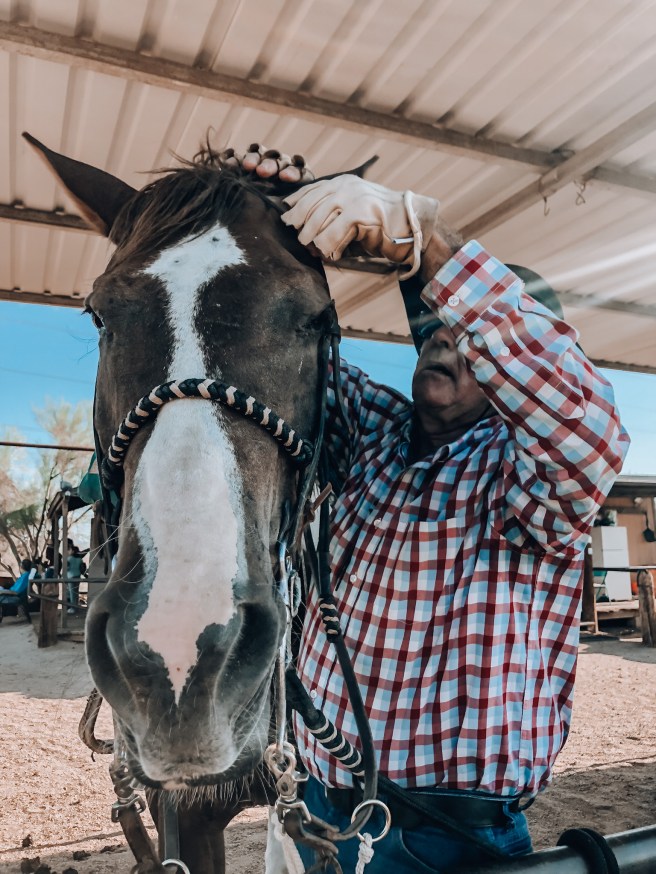
The trail ride I embarked on was with Cave Creek Outfitters. The drive alone was stunning. I had to keep stopping my car because the scenery was so different from what I used in Florida. Upon arrival, I was greeted by a couple of cowboys. Everyone was super welcoming and friendly. They made me feel very comfortable and paired me with another rider that was also alone. We basically had a private tour. It was awesome!
Different Pointe of View
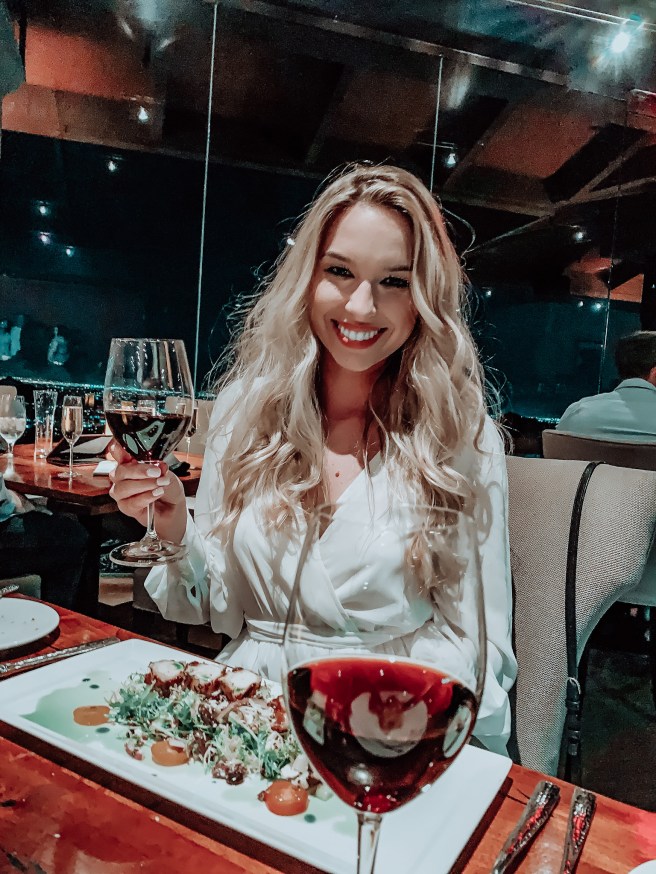
Are you feeling romantic or fancy? Then this restaurant is a must! Being a Florida girl, I was not used to driving up the steep incline to get here, but the food and, of COURSE, the views did not disappoint. My steak was cooked to perfection, and the wine pairing was excellent. The servers and staff are very attentive to the guests. Also, the prices are reasonable, given the ambiance, excellent service, and delicious food.
Stay and Stroll in Downtown Tempe
The Airbnb I stayed at was a newly constructed building near the railroad tracks. Each morning I would wake up to the sounds of the train and sip my coffee while looking out at the gorgeous mountains. I am unsure what constitutes a mountain, but it is not flat in Tempe!
I am a Florida State girl, so downtown Tempe gave me cute college-town vibes. They have a ton of eateries to choose from, especially if you are the “granola-crunchy” type, with tons of juice and smoothie shops to choose from.
Floyd Wright Architectural School
All I can say is, wow! This place is all inspiring for creative minds that can appreciate the whimsical side of architectural design. At some point during the academic year, enrolled students are assigned to create their own homes using the natural elements that surround the land. You can only imagine the natural elements in the hot arid Arizona desert. I encourage anyone to come visit this unique oasis. You will be impressed by what our species in capable of!
In internal medicine, most residency programs have a dedicated individual known as the Chief Resident, who is responsible for ensuring the smooth operation and growth of the program. In this three-year residency, when elected as Chief Resident, an additional year is served. However, not everyone is suited for this position, and the consequences are evident when an inappropriate Chief is chosen.
Depending on the program, Chiefs may be chosen by their peers and invited for an interview, or interested candidates may apply and then interview. In our program, candidates apply and then are interviewed, and the committee votes on the most suitable candidate for the role. I prefer this approach because faculty members understand the necessary qualities for maintaining program growth. The alternative method may resemble a popularity contest, and although we cherish our friendships, leadership skills are essential for this position.
It’s important to note that each program has its own way of allowing Chiefs to operate. In my institution, three Chiefs are elected to divide tasks efficiently. I appreciate the openness of our leadership, and I believe our program is at the forefront of progress.
If you are considering applying for the Chief Resident position, it is crucial to ask yourself the following questions:
Do you derive happiness from seeing others succeed?
Do you genuinely enjoy teaching?
Are you passionate about mentoring and helping individuals through challenging moments?
Are you willing to work beyond regular office hours?
Are you prepared to plan ahead before assuming the position?
Are you organized and respectful of others’ time?
Are you willing to enforce rules and abide by them yourself?
The Chief Resident role may suit you if you answer most of these questions affirmatively. I will discuss my experience and responsibilities as Chief Resident in future posts.
I volunteer as tribute (:p). Here is a photo of me as a patient, teaching our residents during our POCUS curriculum in the cardio block. The residents are learning to obtain the parasternal long-axis and parasternal short-axis windows.
If you are thinking about vacationing in Miami Beach, I highly recommend it! I am a South Florida native, and I have to say that no other place compares to Miami when it comes to our Latin cuisine, clean air and beaches, and an insane party scene.
Miami is unique as we are a hub for Hispanic culture: Most people are unaware that I am Cuban! My mom came as a refugee when Fidel Castro took everything from her family. It was a brave decision to make it to the United States with only clothes on their backs. This is a familiar story you will frequently hear when speaking to the locals of Miami. As I explore more of my own city, I will be adding things to do in the area!
Take a Stroll on Ocean Drive
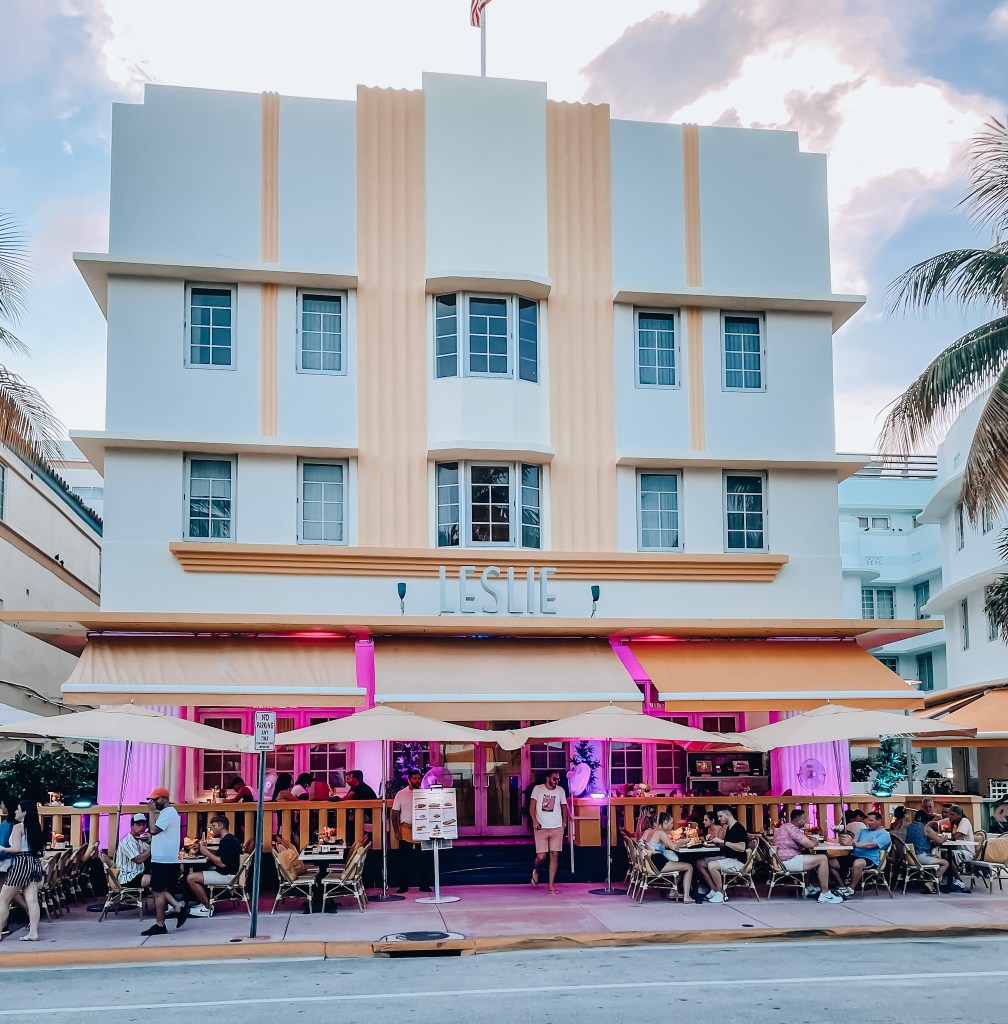
I will literally walk MILES on Ocean Drive. You will not find architecture like the buildings here in any area of the country. You can work up a sweat and get bikini ready even while on vacation 🙂
Rent a Yacht for the Day
If you love the water, I highly recommend getting a giant group of people to rent a Yacht for the day. Depending on the size of the vessel and your party, it can be very affordable! I use @adri_yachts_rent_. He is an excellent captain, and his co-captain (his aunty) will ensure your experience is exactly what you wished for!
Enjoy a Night at the Fontainebleau and LIV
If you have never been to Miami, you have to check out both of these places. The Fontainebleau Hotel is a luxurious “Las Vegas” type of vibe where you see giant bright chandeliers hanging from the ceiling and can catch EDM celebs frequenting the premises. LIV is attached to the Fontainebleau and offers a state-of-the-art, award-winning Dynacord sound system. If you are into the electronic dance scene, enjoy a high-energy performance, and love to dance, LIV is the place to be!
As the saying goes, if this journey was easy, anyone would do it. That is precisely why you are unique. You are the chosen one to have that innate drive to keep pushing to get where you need to be. Sure, the road is long, but life is long. A long journey should never be your excuse for not pursuing a career of your choice. Now imagine getting up on that stage to receive your first white coat. Keep envisioning and keep dreaming.
And remember! It is okay to fail. As I mentioned in my previous post, failing a class did not stop me! It just helped me reevaluate my weaknesses. I referenced someone for help and realized that I was studying wrong the whole time during my first semester of college.
Keep pushing! You got this! #girlstrong
Circa 2019, as a 4th-year medical student doing my clinicals in dermatology. I did not match into dermatology, but that is a topic for later discussion. The journey never ends, and you will still fail throughout. But you must always maintain that grit that got you into medicine in the first place. I felt sad and alone here. But I never quit or once doubted my decision to become a doctor.
Whether or not this is a necessary thing to do, I always start my MICU progress notes with a summary of the events that have occurred since hospitalization. I will update this section when significant events occurred.
Example: This is a 46-yo F with a history of type 1 diabetes who is on day 1 of hospitalization and presented with nausea and vomiting. On presentation, the patient was found to have an anion-gap metabolic acidosis with ketonuria and was admitted to the MICU for management of diabetic ketoacidosis with insulin gtt, and frequent lab draws. Since admission, her anion gap has closed and was bridged with subcutaneous insulin.
I think if a resident can summarize the chief complaint and what we are treating, then ICU becomes a heck of a lot easier. When you struggle on your ICU rotation, remember to ask yourself, “what are we treating” and “why is this person sick?”
Common mistakes
Copying and pasting incorrect information
Not updating important events that took place
Listing out every possible past medical history that is not relevant to the case and fluffing the sentences
24-Hour Course
In this section, I like to add everything that has happened over the last 24 hours. I write out my 24-hour events the same way every single time.
Subjective: What the patient said, what the nurse said, any events overnight)
Vitals: Are they hemodynamically stable? If not, how is their hemodynamics managed?
Example: Patient remains afebrile over 24 hours, requiring Levophed 15 mcg and vasopressin for hemodynamic support.
Intake and Output: This is especially important for ICU patients as they are critically ill and, more times than not, if ignored, can easily become under or over-resuscitated. Please obtain accurate intake and output every single day.
Labs: I do not list out values; I state what those values mean.
Example 1: Instead of writing Na+ 121 with an osmolarity of 230, I will write hyperosmolar hyponatremia.Example 2: If the values are significant, like renal functioning, and we are trending the values, sometimes I will write out relevant information only. Side note: You will lose your attending if you just rattle off and list a bunch of lab values. This can be done in the lab section if you wish to reiterate the significant lab findings.
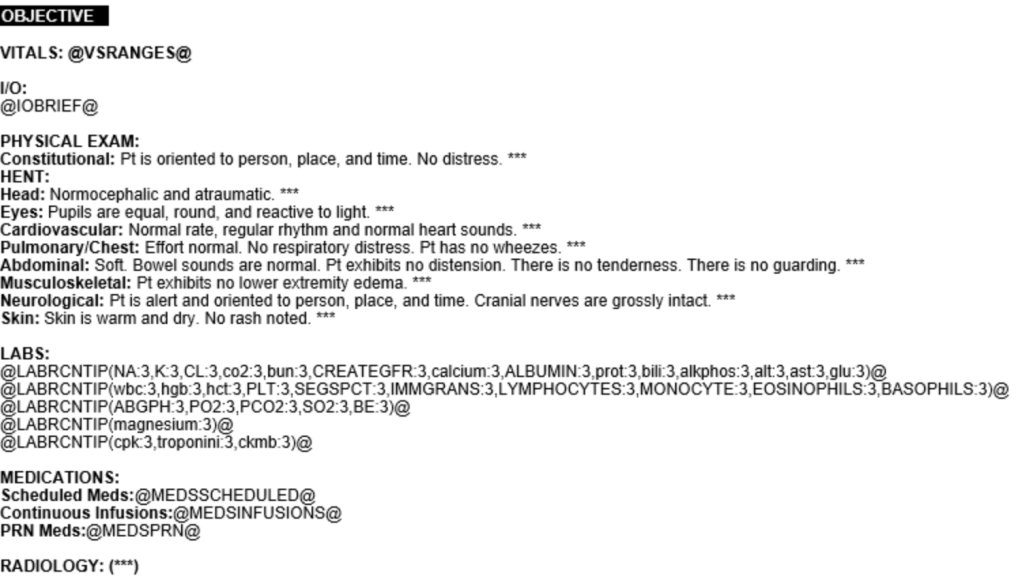
The program I use is EPIC. This is more or less how a template will appear. The *** means you cannot sign your note unless you address that section.
Objective
Vitals
Record vitals over 24 hours. Ensure you indicate episodes of tachyarrhythmias or bradyarrhythmia. Not the times when vitals change. Consider why those values are changing (i.e., is the patient agitated, is the patient in pain, do they have a lead wire that accidentally activates the SA node?)
Intake/Output
In brief, I want to reiterate the importance of fluid balance in the ICU. Once again, one needs to ask themselves, “where is the fluid going.” If you notice that your patient is +15 L and cannot be weaned from the ventilator, chances are there is a problem, which is wet lungs, for example.
Physical Exam
You can still do a complete physical examination on an ICU patient. For example, if a patient is sedated and intubated, a neurological exam can still be performed. Please check the pupillary, corneal, gag, respiratory, and other reflexes every morning. This is essential in patients who have been ventilated for more than a few days.
Electrolytes
I want to briefly touch on the importance of electrolyte balance in critically ill patients, especially when uncommunicative.
Sodium: Ensure the patient is receiving enough water to prevent hypernatremia (more on this topic later)
Potassium: Values should stay above 4 mmol/L to 4.5 mmol/LMagnesium: Values should be >2 mEq/L
Phosphorous: Looking at these values is especially true in our patient population, where the majority are from a nursing home fed through PEG tubes. Thus, one must be aware of refeeding syndrome and should ensure phosphorous levels are adequate.
Relevant Imaging
List out any relevant imaging that will help round out the case. A common mistake I hear is when someone reads aloud an impression from a radiologist without first trying to make their own impression regarding the imaging. You are not expected to be a radiologist, but at least make the effort to look at the images.
Demonstrating the use of coding to auto-populate notes so the provider can save time on documentation.
Assessment and Plan
Very different than a typical ward patient hospitalist patient. If you have ever been on pediatric rotation, it is similar in that ICU patients are assessed by systems. Why? Because patients in the ICU have multiple systems involved and must be addressed so that nothing gets overlooked. Get in the habit of writing your notes the same way every day. This will allow your brain to think in an organized fashion. Below is a sample of the template that I follow.
Neuro: #Diagnosis* Assessment
Plan
Example Neuro: #Hepatic encephalopathy His wife reported he was sleeping more often during the day before the presentation. He is AAO x 1, appears disoriented, and has asterixis.
Insert NG tube for medication administration
Ordered lactulose 30 mL tid via NG tube to titrate to a total of 3 bowel movements per day
Below I listed out a sample of the template that I use to help me to remember to add details where it is needed while modifying it to look like the above.
Neurology:
Current RASS: ***, RASS goal: ***
Brain stem reflexes: ***
Sedative requirements: ***
Pain management: ***
Cardiology:
Cardiac rhythm: ***
HR/BP: ***
Vasopressor requirements: ***
MAP goal >65 mmHg
Pulmonary:
Option 1: Patient denies SOB, lungs are clear to auscultation, no acute findings of CXR.
Option 2: Date Intubated: ***; Patient is on mechanical ventilation with mode setting ***, ABG: ***
MAP goal >65 mmHg
Gastroenterology:
Option 1: Patient is on *** diet
Option 2: Tube feeds via *** with *** at *** cc/h.
Nephrology/Electrolytes:
Intake: ***/Output: ***/Net: ***
K+: ***
Mg2+: ***
Infectious Disease:
Abx: *** day ***/***
Endocrinology:
TSH: ***, Hga1c ***% on ***
Insulin regimen: ***
BG goal <180 mg/dL
Hematology:
***
Checklist Manifesto
THE CHECKLIST IS ESSENTIAL! Please do NOT copy and paste this section. Copying and pasting notes are okay to a certain extent but be reminded if you copy and paste material that is not up to date, this can be detrimental to a patient’s care. In addition, if your note is used in court, you may be deemed unreliable as an author if the notes do not reflect your care.



















 A Medical Blog by Dr. Megan Arielle